
We helped a B2B fintech platform rank higher on Google, generating more organic traffic, quality leads, and stronger brand awareness through strategic SEO.
2.8k+
Organic Traffic
DA 12 to 30
Domain Authority
DA 12
1.9k+
Keywords Ranking
13 Months
Timeline
Ongoing
Client Overview
The client is a B2B fintech SaaS company that provides software designed to help finance and operations teams manage trade deductions and resolve accounts receivable issues more efficiently. The platform helps organizations reduce revenue leakage caused by retailer chargebacks, short payments, and deduction disputes by automating complex reconciliation workflows. Their solution is primarily used by mid-market and enterprise companies that deal with large volumes of financial transactions and retailer deductions.
Business Challenges
When a good product isn't getting found, the problems are almost never random. There's always a root cause, usually a few. Here's what we found.
The client was facing low domain authority, limited organic visibility, and very few keyword rankings in search engines. As a result, the website was not attracting consistent organic traffic, and most leads were coming from paid channels and referrals rather than search.
Our B2B SEO Strategy
SmartWebTech implemented a structured SEO approach, focused on building technical foundations, optimizing content, and improving authority. The project was executed across five phases over a 13 month period.
01
Technical SEO & Site Architecture
Months 1–2
The project began with a complete technical SEO audit to identify issues affecting website performance, indexing, and crawlability. As part of our SEO audit services, we analyzed the website’s technical structure, crawlability, and indexing issues to uncover opportunities for improvement.
Tactics delivered:
- Core Web Vitals and page speed optimization
- Crawl structure improvements and XML sitemap rebuild
- Structured data implementation (SoftwareApplication, FAQ, BreadcrumbList)
- Topic cluster architecture planning
- Canonical tag and duplicate content fixes
- Internal linking structure improvements
02
On-Page SEO, Optimization of Existing Pages
Months 3–4
After resolving technical issues, the next phase focused on optimizing all existing website pages to improve search relevance, align content with search intent, and strengthen on-page SEO signals.
Key actions delivered:
- Optimized title tags, meta descriptions, and headings (H1–H3)
- Internal linking improvements across key pages
- Content updates for clarity and relevance
- Structured data implementation where applicable.
03
Content Strategy
Months 5–6–7–8
A structured content strategy was implemented using a hub-and-spoke model to build topical authority around deduction management and accounts receivable operations. Content was developed to support different stages of the buyer journey and strengthen the overall topic cluster.
Content tiers:
- Articles explaining industry challenges and workflows
- Guides for evaluating solutions and improving processes
- landing pages targeting solution-focused searches
- Supporting articles to strengthen topic clusters
- Internal linking between content and core product pages
- Executed the B2B SEO campaign targeting finance, accounting, and retail operations keywords to capture qualified search demand.
04
Authority Building
Months 9–10–11
The final phase focused on improving domain authority through strategic backlink acquisition and continuous SEO optimization.
Link building tactics used:
- Expert contribution articles in fintech and accounting publications
- Journalist query responses and media commentary
- PR placements in fintech and SaaS media platforms
- Guest articles on software review websites
- SaaS and finance directory placements
- Creation of data-driven resources designed to attract backlinks
- Created and optimised business profiles across major software review and discovery platforms including G2, Capterra, Crunchbase, Software Advice, GetApp, and TrustRadius, for a B2B fintech SaaS, buyers actively search on G2 and Capterra before making a purchase decision, and each profile adds a trusted backlink while getting the platform discovered by bottom-of-funnel buyers ready to decide.
Ongoing SEO optimization:
- Updating underperforming content
- Expanding thin pages
- Strengthening internal linking
- Identifying new b2b seo keywords and content opportunities
05
Competitor Gap Analysis
Months 12–13
We analyzed top competitors to identify high-value keywords and pages. Insights guided content creation and link-building for maximum ROI.
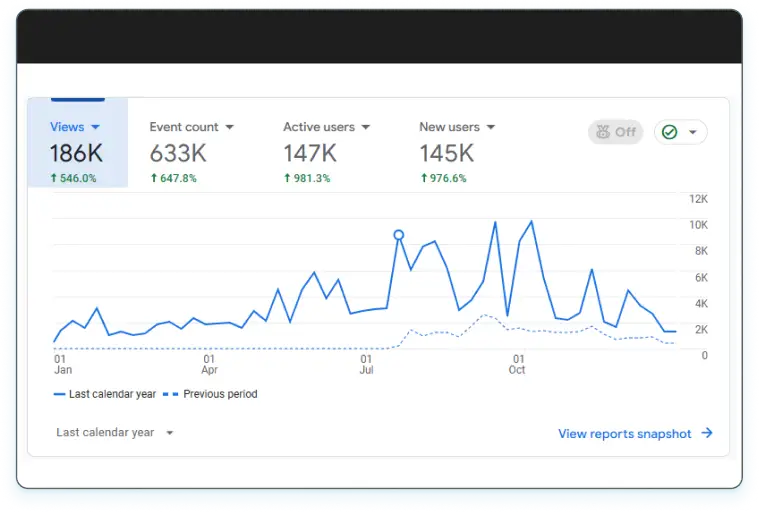
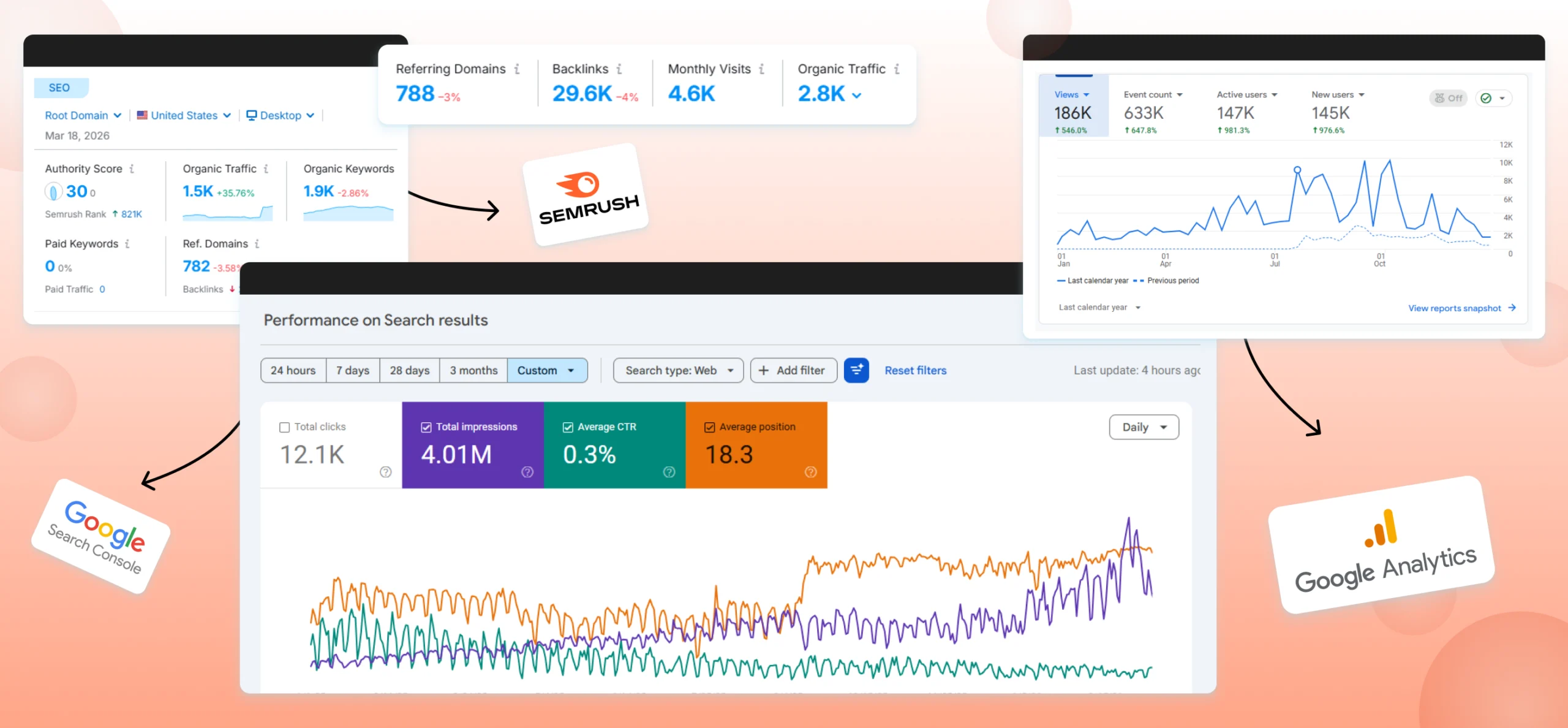
All progress was tracked and verified using SEMrush,Google Search Console and Google Analytics, ensuring transparency and credibility.
Result
Organic SEO compounds. The first months feel slow because they are, you're building foundations that are invisible on the surface. Around month four or five, something shifts. Rankings accelerate. Traffic multiplies. Content that's been quietly sitting starts pulling serious volume.
Before VS. After
| Metric | Before SmartWebTech | After 12+ Months | |
|---|---|---|---|
| Organic Traffic | Low hundreds (mostly branded) | → | 2.8k+ (Organic Traffic) |
| Domain Authority Score | Weak — hard to rank | → | DR 30 — ranking with authority |
| Referring Domains | Fewer than 30 | → | 781 (Avg DR 55+) |
| Organic Keywords | Very less | → | 1.9k+ |
| Indexed Content Assets | ~5 underoptimised pages | → | 15+ webpages and 200+ blogs fully optimised |
| Inbound Demo Requests | Practically none from organic | → | Consistent monthly pipeline |
What Changed Beyond The Numbers
The traffic numbers are one thing. But here's what this team talked about most when they reviewed results after over a year:
- Organic leads close at a higher rate than outbound: People who found the platform through Google search had already read articles and understood their deduction management challenges. By the time they requested a demo, they were already interested and more likely to become customers.
- Sales conversations became easier and faster: Since many buyers had already consumed educational content on the website, the sales team did not need to explain basic concepts. They could focus directly on the client’s needs and product demonstration.
- The cost per lead decreased over time: Unlike paid advertising, organic traffic does not require paying for every visitor. As the website’s domain authority grew and more content started ranking, traffic and leads continued to increase without additional ad spend.
- Stronger authority in the industry: When finance or operations professionals searched for information about deduction management, they frequently discovered the client’s content first. This positioned the company as a trusted resource in its category and increased brand credibility.
Related Case Studies
Ready to Stop Being the Best-Kept Secret in Your Market?
If your product solves a real problem but your organic presence doesn't show it let's fix that. We'll tell you honestly where the opportunity is and exactly how to take it.